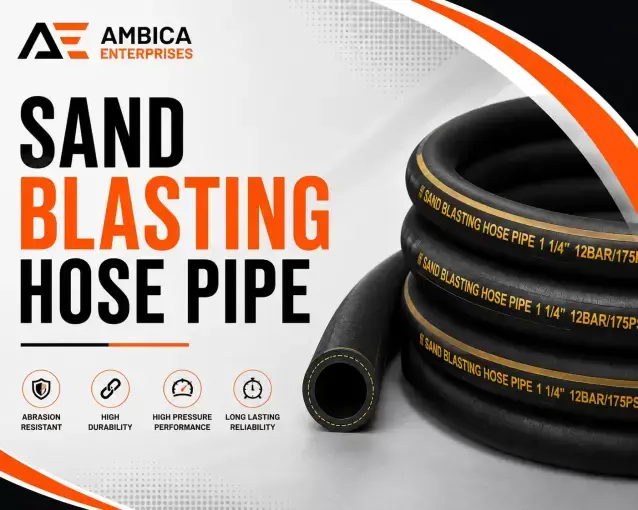
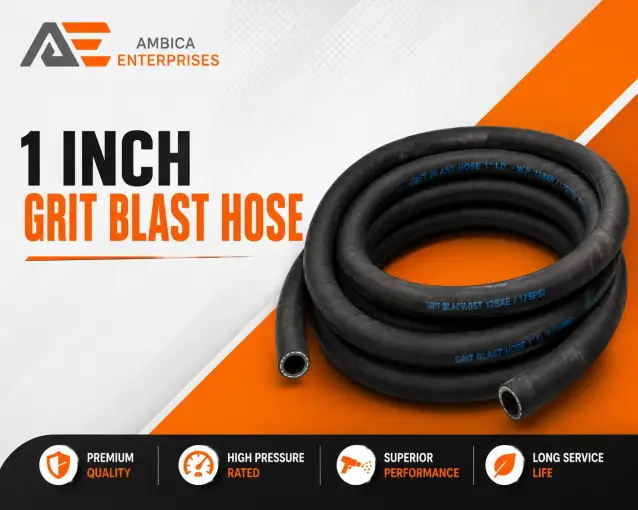
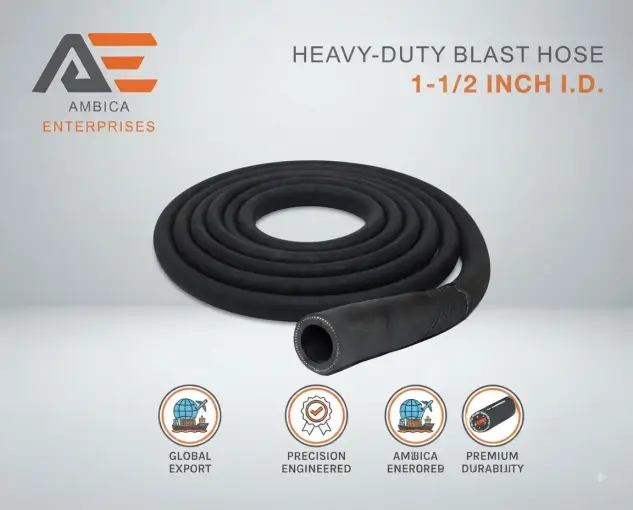
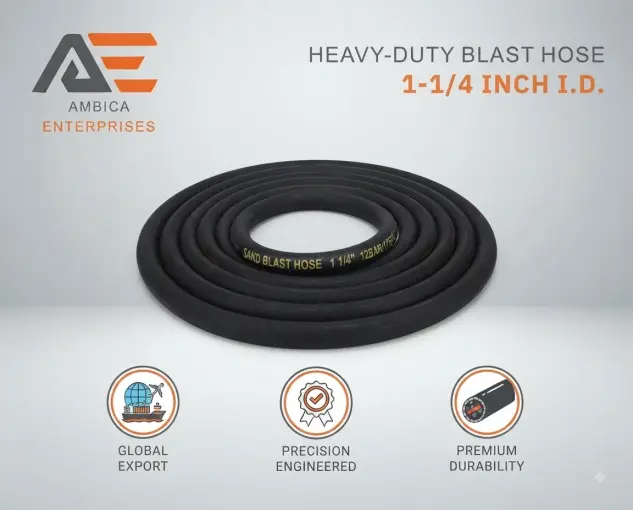
A sand blasting hose pipe is a reinforced rubber sandblast hose line designed to carry abrasive media and compressed air from a sand blasting pot to the nozzle. Unlike a general-purpose hose, a blasting hose pipe must withstand continuous internal abrasion from sand, steel grit, garnet, and shot while maintaining burst strength under high operating pressure.
A sand blasting hose pipe for an abrasive blasting machine combines an abrasion-resistant inner tube, textile or wire reinforcement, and a tough outer cover, making it suitable for portable pots, blast rooms, and industrial surface preparation circuits.
How Does a Sand Blasting Hose Pipe Work?
Compressed air from the blast pot propels abrasive media through the hose pipe bore toward the sand blasting nozzle. The inner tube resists scouring from high-velocity particles while reinforcement plies prevent expansion and blow-out. The outer cover protects against weather, dragging, and contact with sharp surfaces during field use.
Worn hose pipe walls, soft spots, or leaking couplings reduce blast pressure and create safety risks. Replacing worn sandblast hose pipe sections on schedule keeps blasting productive and prevents unexpected line failure.
Types of Sand Blasting Hose Pipe
Selection depends on bore size, blast pressure, media type, hose length, and whether pre-assembled sand blasting hose couplings are required.
Standard Rubber Sand Blasting Hose Pipe
The common choice for portable pots and workshop blasting setups.
Standard Hose Pipe Advantages
- Excellent abrasion resistance for garnet sand and steel grit service
- Flexible enough for operator movement on site
- Cost-effective replacement for routine maintenance
- Matched to standard blast hose couplings and clamps
Heavy-Duty Reinforced Hose Pipe
Built for aggressive media, longer runs, and continuous multi-shift blasting.
Heavy-Duty Hose Pipe Benefits
- Thicker tube wall for extended wear life under steel grit and shot
- Extra reinforcement plies or wire helix for higher pressure duty
- Suitable for shipyard and industrial sand blast room installations
- Lower replacement frequency on demanding production lines
Custom Length & Pre-Assembled Hose Pipe
Supplied when project layout or export specs require tailored blast line assemblies.
Common Applications of Custom Hose Pipe
- Pre-coupled hose pipe sets for portable blast pot kits
- Extended runs for blast room and yard layouts
- Matched assemblies with sand blasting nozzle holders and couplings
- Export maintenance packs for overseas blasting equipment
Benefits of Using Quality Sand Blasting Hose Pipe
- Safer operation: Reinforced construction reduces burst and blow-off risk.
- Longer service life: Abrasion-resistant tube withstands sand, grit, and steel shot duty.
- Stable blast performance: Correct bore size maintains air velocity to the nozzle.
- Flexible routing: Easier handling for operators on ladders, tanks, and structures.
- System compatibility: Sized for couplings, holders, and common pot outlets.
Sand Blasting Hose Pipe for Abrasive Blasting
Every sand blasting system depends on dependable hose pipe from pot to nozzle. Quality sand blasting hose pipe works with couplings, nozzle holders, remote controls, and pinch valves to keep abrasive flow controlled and productive. We supply hose pipe, sand blasting hose, shot blasting hose, and complete sand blast hose assembly from India.
Choosing Reliable Sand Blasting Hose Pipe Manufacturers
Evaluate inner tube abrasion rating, reinforcement type, bore accuracy, pressure rating, coupling compatibility, and technical support. A reliable manufacturer helps match sand blast hose pipe ID to nozzle size, sand blasting air compressor capacity, and media type for optimal blasting efficiency.
Importance of Trusted Sand Blasting Hose Pipe Suppliers
Experienced suppliers assist with bore sizing, length calculation, coupling selection, cut-to-length service, and export packing for project and fleet maintenance programs.
We are a trusted India-based supplier of high-quality sand blasting hose pipes and essential abrasive blasting equipment. Our product range includes durable sand blasting hoses, abrasive blasting hose, precision-engineered couplings, blasting nozzles, nozzle holders, pinch valves, and a wide selection of related spare parts. Designed for demanding industrial applications, our products offer reliable performance, flexibility, and excellent resistance to abrasive materials. We serve businesses seeking dependable blasting solutions with consistent product quality and professional service from India. Request a quote for sand blasting hose pipe supply today; share bore size, length, pressure rating, quantity, and delivery location.