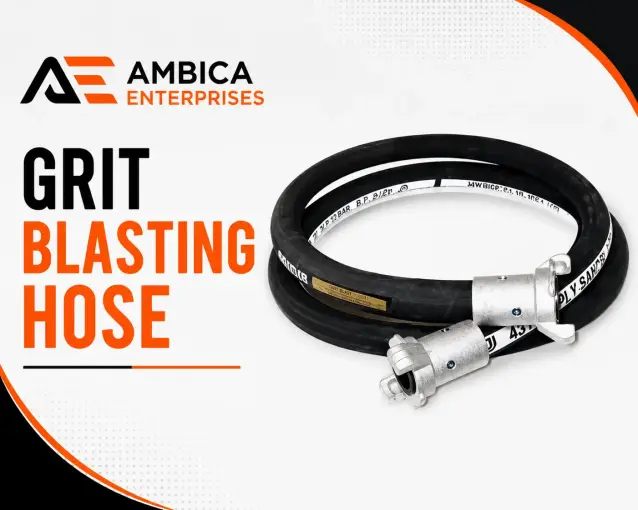
Grit Blasting Hose – High-Performance Hose for Abrasive Blasting Applications
A grit blasting hose is a specially engineered industrial hose used to transfer abrasive media from a blasting machine, pressure vessel, or blast pot to the sand blasting nozzle. It is designed to withstand continuous contact with abrasive particles moving at high velocity while providing the flexibility and strength required for demanding surface preparation work.
Unlike ordinary air hoses, a grit blasting hose has an abrasion-resistant inner tube specifically designed for abrasive material transportation. Depending on the application, it can be used with suitable media such as steel grit, steel shot, garnet, aluminum oxide, glass beads, copper slag, and other abrasive materials.
Our range of grit blast hoses is suitable for industrial cleaning, rust removal, coating preparation, paint stripping, casting treatment, and other abrasive blasting operations. Selecting the correct hose according to the blasting machine, abrasive media, operating pressure, diameter, and nozzle configuration can help achieve consistent and efficient performance.
What Is a Grit Blasting Hose?
A grit blasting hose is a heavy-duty hose that carries abrasive material from blasting equipment to the nozzle. During operation, compressed air propels the abrasive through the hose at high speed, creating continuous friction against the inner tube.
For this reason, a dedicated abrasive blasting hose requires a wear-resistant internal lining. A suitable construction may include a resilient rubber tube, textile reinforcement, and a protective outer cover. Some industrial designs also incorporate conductive elements to help dissipate static electricity generated during abrasive flow. Commercial sand and shot blast hoses commonly use abrasion-resistant rubber and reinforced construction for this purpose.
The result is a hose designed specifically for abrasive conveying rather than ordinary compressed-air applications.
Grit Blasting Hose for Abrasive Blasting Machines
A grit blasting hose forms an important part of the connection between the abrasive blasting machine and the nozzle. Its job is to deliver the selected abrasive material efficiently while withstanding the pressure and wear generated during operation.
A properly selected hose can provide:
- High resistance to abrasive wear
- Reliable abrasive media transportation
- Flexible nozzle handling
- Strong reinforced construction
- Suitable pressure performance
- Static-dissipating capability where specified
- Compatibility with appropriate abrasive blasting hose couplings and nozzles
- Long service potential under suitable operating conditions
Industrial blasting hoses are available in different bore sizes and pressure ratings, so the hose should be matched to the equipment and application rather than selected by size alone.
Grit Blast Hose Construction
The construction of a grit blast hose has a direct influence on its durability and operating performance.
- Abrasion-Resistant Inner Tube: The inner tube comes into direct contact with abrasive media. A high-quality rubber compound with good abrasion resistance helps withstand repeated particle impact and friction. This is one of the most important characteristics of an industrial abrasive blast hose.
- Reinforcement Layer: Reinforcement provides the hose with strength and stability during pressurized operation. Depending on the design, high-tenacity synthetic textile reinforcement or other suitable materials may be used.
- Protective Outer Cover: The outer cover helps protect the hose against external abrasion, dragging, weather exposure, and routine industrial handling. This is particularly useful when blasting hoses are frequently moved around work areas.
- Conductive Properties: Fast-moving abrasive particles can generate static electricity. Certain blasting hose constructions incorporate copper wires or conductive compounds to provide electrical continuity and help dissipate static charge.
Grit Blasting Hose Uses
A grit blasting hose can be used in many industries where abrasive blasting is required for cleaning, surface preparation, or finishing.
- Metal Surface Preparation: Abrasive blasting is widely used to remove rust, scale, old paint, corrosion products, and other contaminants from metal surfaces. Once properly prepared, the surface can be coated, painted, welded, or subjected to additional processing.
- Foundry and Casting Applications: Foundries use abrasive blasting to clean castings and remove residues, unwanted material, and surface contaminants. A durable grit blast hose helps deliver abrasive media from the blasting equipment to the nozzle.
- Shipyards and Marine Maintenance: Large metal structures often require extensive surface preparation before protective coatings are applied. A flexible abrasive blasting hose can help operators work across large surfaces while maintaining controlled abrasive delivery.
- Railway and Heavy Engineering: Railway workshops and heavy engineering industries use abrasive grit blasting machine operation for maintenance, cleaning, and coating preparation. A durable hose is particularly important where equipment operates for extended periods.
- Fabrication Workshops: Fabricated steel structures and industrial components can require blasting before painting or protective coating. A grit blasting hose allows abrasive media to be transported from the blast equipment to the operator-controlled nozzle.
- Construction and Contractor Applications: Portable abrasive blasting systems are commonly used at construction and maintenance sites. A flexible sand blast hose or grit blasting hose can make it easier to work around large structures and difficult-to-reach areas.
The terms grit blasting hose and sand blasting hose are often used to describe similar types of abrasive conveying hoses. The major difference is generally associated with the abrasive material being used rather than the basic purpose of the hose.
Modern abrasive blasting systems may use steel grit, steel shot, garnet, aluminum oxide, glass beads, copper slag, or other media. The hose should therefore be selected according to the actual abrasive characteristics and operating conditions.
A high-quality sandblast hose and grit blast hose should have an internal construction capable of resisting the abrasive action of the selected media.
Key Advantages of Grit Blasting Hose
Choosing the right grit blasting hose can offer several benefits for industrial blasting operations.
- Excellent Abrasion Resistance: A dedicated blasting hose is designed to handle continuous contact with abrasive particles, helping minimize premature internal wear.
- Improved Flexibility: A flexible hose makes it easier for operators to move the blasting nozzle around large, curved, or irregular workpieces.
- Reliable Abrasive Flow: The correct internal diameter helps support efficient movement of abrasive media between the blasting equipment and nozzle.
- Durable Industrial Construction: Reinforced construction provides strength for pressurized operation and regular industrial handling.
- Versatile Applications: A grit blasting hose can be used for a wide range of surface preparation and cleaning applications across different industries.
- Better Operational Reliability: Selecting a hose according to the abrasive, pressure, diameter, and application can help reduce unnecessary downtime caused by unsuitable hose selection.
Grit Blasting Hose Price
The grit blasting hose price depends on several factors, including hose diameter, length, construction, reinforcement, pressure rating, material quality, and end fittings.
For industrial applications, purchasing decisions should not be based solely on the initial price. An appropriately designed abrasive blasting hose can provide better long-term value when it offers suitable abrasion resistance and service performance.
For an accurate quotation, customers should provide the required hose diameter, length, abrasive type, operating pressure, quantity, and coupling or nozzle requirements.
How to Choose the Right Grit Blasting Hose
Before purchasing a grit blasting hose, consider the following factors:
- Abrasive media: Identify the material being transported, such as steel grit, steel shots, garnet, aluminum oxide, or glass beads.
- Internal diameter: Select the bore according to the blasting machine and nozzle requirements.
- Working pressure: Ensure the hose is rated for the operating pressure of the system.
- Hose length: Choose a suitable length for the working area without creating unnecessary handling difficulties.
- Flexibility: Consider how frequently the operator will move the hose during blasting.
- Couplings: Make sure the hose and coupling dimensions are compatible.
- Nozzle connection: Confirm that the hose assembly works with the selected nozzle and holder.
- Working environment: Consider external abrasion, dragging, temperature, and general site conditions.
For example, commercial blasting hoses are offered in various bore sizes and pressure ratings, while manufacturers also specify minimum bend radii and construction details.
Grit Blasting Hose Assembly
A complete grit blasting hose assembly can include the blasting hose together with suitable couplings, sand blasting nozzle holders, nozzles, and other accessories. Properly matched components help establish a secure connection between the blasting equipment and nozzle.
When selecting a grit blast hose assembly, check the internal diameter, coupling dimensions, pressure rating, hose length, nozzle connection, and abrasive compatibility.
Using compatible components can support efficient abrasive delivery and reduce problems caused by mismatched fittings.
Why Choose Our Grit Blasting Hose?
We supply grit blasting hose solutions for industrial abrasive blasting and surface preparation applications. Our range is suitable for customers looking for grit blast hose, abrasive blasting hose, shot blasting hose, sand blasting hose, sandblast hose, shot blast hose, and industrial blasting hose.
The right hose can make an important difference to abrasive blasting performance. By selecting the correct construction, diameter, pressure rating, flexibility, and fittings, users can establish a dependable connection between their blasting machine and nozzle.
Whether the requirement is for metal surface cleaning, rust removal, casting preparation, coating removal, shipyard maintenance, fabrication, railway work, or contractor blasting, a properly selected grit blasting hose can provide the abrasion resistance, flexibility, and durability needed for demanding industrial operations.
Always select and operate the hose according to the manufacturer's specifications and the requirements of the complete blasting system.
Grit Blasting Hose Suppliers in India
We are a trusted grit blasting hose supplier in India, offering industrial hose solutions for abrasive blasting applications. Our hoses are intended for customers who require dependable performance in demanding environments such as foundries, fabrication workshops, shipyards, heavy engineering facilities, construction sites, and maintenance operations.
Every blasting application has different requirements. Therefore, factors such as hose diameter, length, working pressure, abrasive type, flexibility, coupling size, and nozzle connection should be evaluated before selecting the appropriate product. We are also provide sand blasting spare parts such as pinch valve, sand blasting nozzle, remote control valve, shot blasting wheel, abrasive storage hopper, and sand blasting helmet, etc.
Our range can be suitable for applications requiring grit blast hose, shot blasting hose, sand blasting hose, abrasive blasting hose, and sandblast hose solutions.