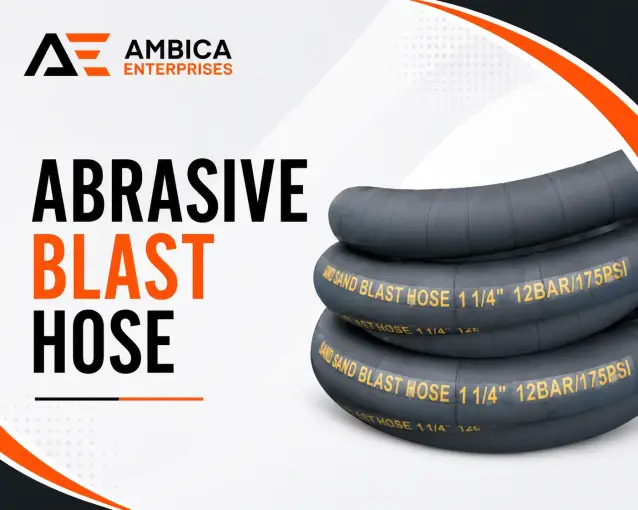
An Abrasive Blasting Hose is an essential part of a professional abrasive blasting system. It is designed to transport abrasive media from a blasting machine or pressure vessel to the sand blasting nozzle under controlled pressure. Because the hose is continuously exposed to high-velocity abrasive particles, it needs to provide excellent abrasion resistance, flexibility, strength, and dependable performance.
Our Abrasive Blasting Hose range is developed for demanding industrial applications where ordinary pneumatic hoses are not suitable. These hoses can be used for compatible blasting media such as steel shot, steel grit, garnet, aluminum oxide, glass beads, copper slag, and other abrasive materials. Proper hose selection helps maintain smooth abrasive flow and supports efficient surface preparation.
Whether you require a shot blasting hose, sand blasting hose, grit blasting hose, sandblast hose, or abrasive blast hose, choosing a product according to your machine and application requirements is important for reliable operation.
What Is an Abrasive Blasting Hose?
An Abrasive Blast Hose is a specially constructed industrial hose used to carry abrasive material through a blasting system. Compressed air propels the abrasive through the hose toward the nozzle, where it is directed onto the work surface.
The continuous movement of abrasive media can cause significant internal wear. Therefore, a dedicated abrasive blasting hose normally incorporates an abrasion-resistant inner tube along with reinforcement and a protective outer cover. Depending on the product design, conductive elements may also be incorporated to help dissipate static electricity.
Unlike a standard air hose, a blast hose is specifically engineered for abrasive-material conveying applications.
Shot Blasting Hose
A shot blasting hose is widely used with shot blasting and abrasive blasting equipment to transfer blasting media efficiently. It needs to withstand repeated exposure to abrasive particles while remaining manageable for the operator.
Different applications can require different hose diameters, lengths, constructions, and pressure ratings. The hose should therefore be selected according to the blasting machine, abrasive media, operating conditions, and nozzle configuration.
Sand Blasting Hose
A sand blasting hose is designed for conveying suitable abrasive materials during cleaning, surface preparation, rust removal, and coating removal operations. Although the term sandblast hose is commonly used, modern abrasive blasting applications can use many types of media instead of conventional sand.
Grit Blasting Hose
A grit blasting hose is similarly designed to handle abrasive grit under pressure. The internal construction must resist the wear generated when abrasive particles repeatedly travel through the hose.
Quality sand blast hose and grit blasting hose products are therefore different from conventional pneumatic hoses. Their construction focuses on abrasion resistance while still providing sufficient flexibility for operator-controlled blasting.
Abrasive Blasting Hose Construction
The performance of an Abrasive Blasting Hose depends significantly on its internal and external construction.
Abrasion-Resistant Inner Tube
The inner tube is the first layer exposed to abrasive media. A suitable rubber compound is used to provide resistance against wear caused by high-speed particles. This helps support reliable abrasive transportation during repeated blasting operations.
Reinforcement Layer
Reinforcement provides the hose with structural strength and helps it withstand the pressure and mechanical stresses associated with industrial use. Different hose designs may use textile reinforcement or other suitable reinforcement systems.
Protective Outer Cover
The outer cover protects the hose against external abrasion, handling, and environmental conditions. A durable outer layer is particularly useful when the hose is dragged or moved around industrial work areas.
Static-Conductive Construction
Abrasive material moving rapidly through a hose can generate static electricity. Suitable conductive construction helps dissipate static buildup and can be an important consideration when selecting an industrial blasting hose.
Key Features of Abrasive Blasting Hose
A high-quality Abrasive Blasting Hose should offer a balanced combination of durability, flexibility, and resistance to abrasive wear.
- High Abrasion Resistance: The hose must withstand repeated contact with abrasive media. An abrasion-resistant inner tube helps reduce internal wear and can contribute to longer service life.
- Flexible Design: Flexibility allows operators to move the abrasive blasting nozzle around workpieces more easily. This is especially important when cleaning large, irregular, or difficult-to-access surfaces.
- Strong Reinforcement: A reinforced structure helps the hose withstand pressure and routine industrial handling. The appropriate reinforcement should be selected according to the working conditions.
- Reliable Abrasive Flow: Correct hose sizing can help support efficient movement of abrasive material from the blasting equipment to the nozzle.
- Industrial Durability: A suitable industrial blasting hose is designed for demanding working environments such as foundries, fabrication facilities, shipyards, engineering workshops, and maintenance operations.
Uses of Abrasive Blasting Hose
An Abrasive Blasting Hose can be used across a wide range of industrial surface-preparation applications.
Metal Cleaning and Rust Removal
Abrasive blasting is commonly used to remove rust, scale, old coatings, and contaminants from metal surfaces. After cleaning, components can be prepared for painting, coating, welding, or other finishing processes.
Foundry and Casting Industries
Foundries use abrasive blasting machines to clean cast components and remove unwanted residues from manufactured parts. A durable shot blast hose helps deliver abrasive media to the blasting nozzle during these operations.
Shipbuilding and Marine Maintenance
Shipyards often require extensive surface preparation before coating and maintenance. An abrasion-resistant abrasive blast hose can support the movement of blasting media across large work areas.
Railway and Heavy Engineering
Railway components, fabricated structures, machinery, and heavy industrial parts can require abrasive blasting for cleaning and coating preparation. Flexible blasting hoses allow operators to direct the nozzle accurately across the workpiece.
Construction and Contractor Applications
Portable sand blasting machine is frequently used for restoration, maintenance, cleaning, and surface preparation. A flexible sandblast hose can be particularly useful where operators need to move equipment and hoses around different work locations.
Types of Abrasive Blasting Hose
Blasting hoses are available in different constructions to suit various operating requirements. 2-ply and 4-ply blasting hoses are commonly used configurations.
A 2-ply blasting hose can offer a practical combination of flexibility and durability for suitable applications. Its lighter construction may make it easier to handle during frequent nozzle movement.
A 4-ply blasting hose provides additional reinforcement for applications where greater structural strength is required. The heavier construction can be advantageous in demanding working conditions, although flexibility may differ from lighter hose designs.
The appropriate construction depends on the application, abrasive media, operating pressure, hose length, and equipment specifications.
Abrasive Blast Hose Assembly
An abrasive blast hose assembly can include the hose together with compatible couplings, sand blasting nozzle holders, nozzles, and other accessories. Properly matched components help create a dependable connection between the blasting equipment and nozzle.
When selecting a blast hose assembly, pay attention to the hose internal diameter, coupling dimensions, nozzle connection, operating pressure, and abrasive media. Correct component matching can help minimize connection issues and support efficient blasting.
Advantages of Using a Quality Abrasive Blasting Hose
Investing in a suitable Abrasive Blasting Hose can provide several operational benefits:
- Excellent abrasion resistance for continuous abrasive media flow
- Better flexibility for easier nozzle movement
- Strong construction for demanding industrial conditions
- Reliable abrasive transportation from machine to nozzle
- Improved operator handling during surface preparation
- Longer service potential with proper selection and maintenance
- Compatibility with different blasting systems
- Reduced premature hose replacement when used within specifications
The right hose can therefore contribute to both blasting efficiency and overall equipment reliability.
How to Select the Right Abrasive Blasting Hose
Before purchasing an Abrasive Blasting Hose, evaluate the complete blasting application. Important considerations include the type of abrasive media, hose internal diameter, length, working pressure, construction, flexibility, abrasive blasting hose coupling dimensions, nozzle size, and frequency of operation.
The hose should always be compatible with the specifications of the blasting equipment. Abrasive characteristics also matter because some media can create greater internal wear than others.
For demanding applications, prioritize abrasion resistance, reinforcement, and durability. Where the operator needs frequent movement, flexibility should also be considered.
It is also important to follow the manufacturer's pressure rating and installation recommendations rather than selecting a hose based only on appearance or price.
Why Choose Our Abrasive Blasting Hose?
We provide Abrasive Blasting Hose solutions for industrial abrasive conveying and surface-preparation applications. Our range is suitable for different blasting equipment and can be selected according to application requirements such as hose size, construction, abrasive media, pressure, and operating environment.
We are the leading abrasive blasting hose manufacturer and supplier of shot blasting hose and sand blasting hose to grit blasting hose, sandblast hose, shot blast hose, rubber sandblast hose, and abrasive blast hose assembly; and sand blasting spare parts such as sand nozzle, sandblaster foot paddle, mixing tube, pinch valve, shot blasting wheel, etc. The right product can help support consistent abrasive flow and dependable blasting performance.
A properly selected Abrasive Blasting Hose is more than a connection between a machine and nozzle it is an important component of the complete blasting system. Choosing the appropriate hose according to abrasive type, machine specifications, operating pressure, and working conditions can help improve efficiency, operator handling, and service life.